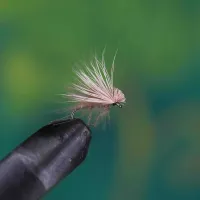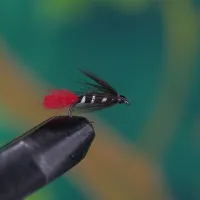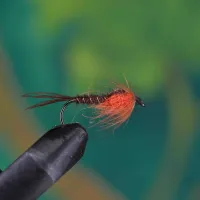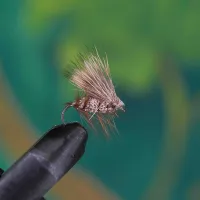
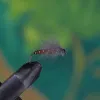
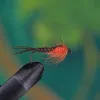
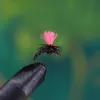
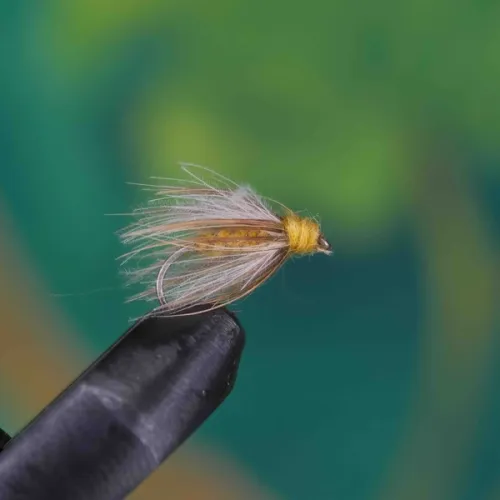
October Caddis Pupa
LFT-T55.10Description
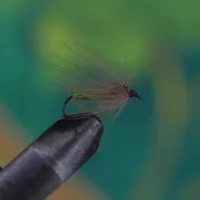
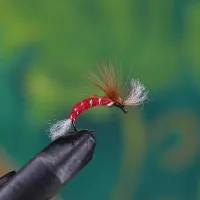
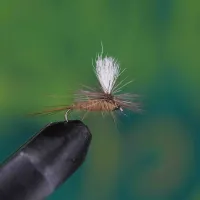
The October Caddis Pupa imitates the pupal stage of Dicosmoecus, the largest caddisfly genus in North America. The larvae build their cases from small pebbles and spend up to two years in the water before pupating - a process that takes about two months. Adult emergence concentrates in September through November, mostly during warm afternoon hours, and is considered one of the most important fall events among North American fly fishers.
The October Caddis Pupa is worked deep in the current to imitate the rising pupae shortly before emergence - especially effective on fast freestone stretches with coarse boulder substrate, where the larvae prefer to live, a proven fall choice.
Fair Trade, Full Circle
Your flies are tied fairly, with the best materials, on a barbless hook. "Fliegenfischen mit Herz" is building a base for women in Nairobi. The women there own and run the tying workshop themselves, giving them economic independence, pride in their craft, and joy in their customers. Let's work together toward a more balanced world.
Please follow this link - thank you for your support and for spreading the word.