



Bivisible
LFT-T74.12Description
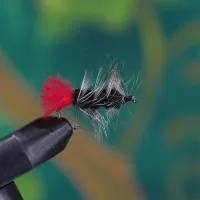
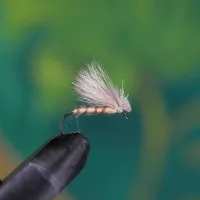
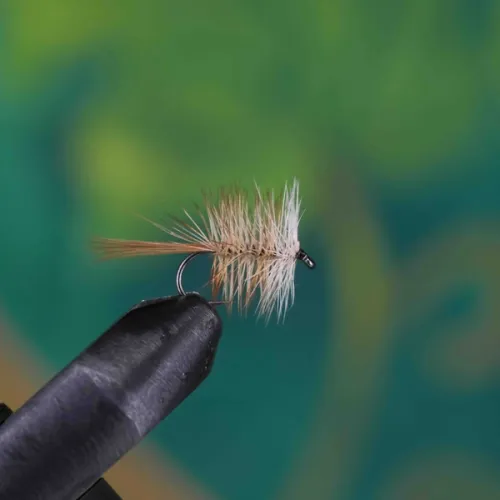
The Bivisible traces back to American angler Edward Ringwood Hewitt, who developed the pattern in the 1920s and introduced it in his 1926 book "Telling on the Trout". It derives from the older English Palmer fly; the characteristic two-tone hackling - pale in front, dark behind - was meant specifically to improve visibility for the angler. Through tyers such as Ray Bergman, along with Rube Cross and the husband-and-wife team of Walt and Winnie Dette, the pattern spread across the USA in the 1930s and '40s.
The dense, palmered hackle body gives the Bivisible exceptional buoyancy, making it especially suited to fast, broken water where other dry flies would quickly sink. As an attractor pattern with no specific natural imitation, it's fished dead-drift, and its pale forward hackle zone also makes it easy for the angler to track in difficult light.
Fair Trade, Full Circle
Your flies are tied fairly, with the best materials, on a barbless hook. "Fliegenfischen mit Herz" is building a base for women in Nairobi. The women there own and run the tying workshop themselves, giving them economic independence, pride in their craft, and joy in their customers. Let's work together toward a more balanced world.
Please follow this link - thank you for your support and for spreading the word.