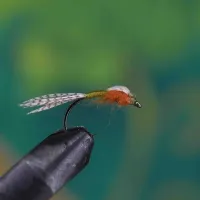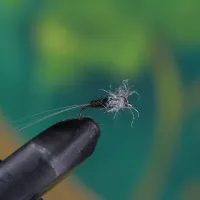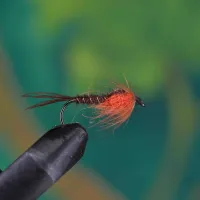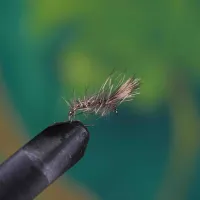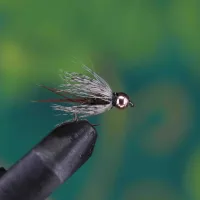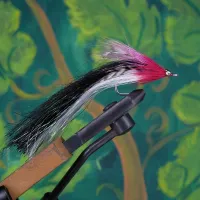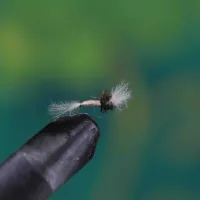
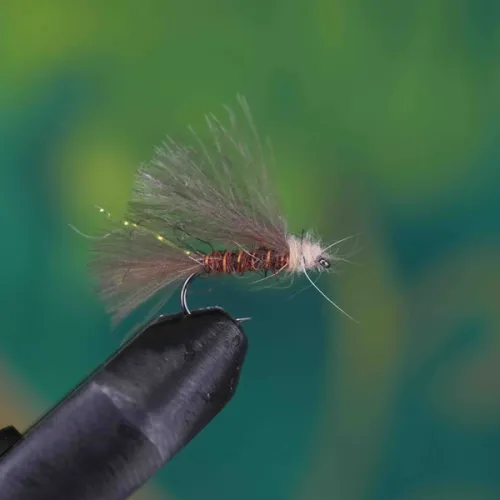
Flymph
LFT-N123.14Description
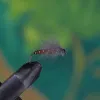
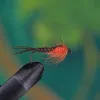
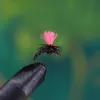
The flymph traces back to James Leisenring, a machinist from Allentown, Pennsylvania, who - influenced by G. E. M. Skues' wet-fly patterns - developed the traditional North Country spider patterns further with a more realistic, tapered body and thorax, replacing the slim, straight bodies of the Yorkshire tradition. His student Vernon "Pete" Hidy coined the term "flymph" in 1971 for these "wingless wets," representing a nymph in the act of becoming a winged fly. Their joint 1941 book "The Art of Tying the Wet Fly" remains a standard work on soft-hackled nymph patterns to this day.
The flymph is fished classically wet, just under the surface with a natural drift, to imitate a hatching insect transitioning into a fully formed fly. The soft hackle creates lively movement in the water - a proven technique for trout and grayling on calmer stretches of water.
Fair Trade, Full Circle
Your flies are tied fairly, with the best materials, on a barbless hook. "Fliegenfischen mit Herz" is building a base for women in Nairobi. The women there own and run the tying workshop themselves, giving them economic independence, pride in their craft, and joy in their customers. Let's work together toward a more balanced world.
Please follow this link - thank you for your support and for spreading the word.